
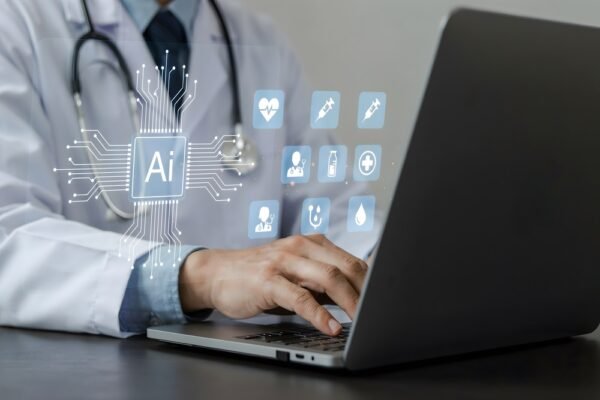
You spent years learning how to care for patients, not how to code. So the idea of picking up AI skills might sound like a stretch. Here is the good news. You do not need a tech background to get started. Not even close. The healthcare workers thriving with AI right now are nurses, aides, and office staff who simply chose to learn. And you can join them.
AI Is Already in the Building
AI is likely already integrated into your workday, possibly without you realizing it. It flags odd patterns in patient charts. It helps sort scheduling. It even lends a hand reading scans and lab results. The technology quietly hums along in the background of modern care. So this is not about bolting some strange new gadget onto your job. It is about understanding a tool that already lives in your world. Once you see it clearly, working alongside it feels a whole lot less scary.
You Already Have the Hardest Part
Here is something people miss. The toughest skill in healthcare is not technical. It is judgment. Knowing when something looks off. Knowing when to ask a second question. Knowing a patient needs a human touch, not just a data point. AI cannot do any of that. It crunches information, sure, but it does not care, and it does not truly understand. You bring the wisdom. The machine brings the speed. This is where real innovation occurs. And you’ve already got the tougher part covered.
Start Small and Stay Curious
You do not have to swallow the whole thing in one gulp. Start small. Play around with a tool that drafts notes or answers quick questions. Notice what it does well. Notice where it stumbles. Curiosity carries you further than any degree here. Ask why a tool gives the answer it gives. Poke at it. Test it. The more you experiment with AI, the more at ease you’ll become. It is this comfort that is the key distinction between those who embrace AI and those who are intimidated by it.
Get Real Training That Fits Your Life
At some point, poking around on your own hits a ceiling. That is when solid training pays off. The right course explains the basics in plain language, no computer science degree required, and connects everything straight back to patient care.
An AI in healthcare course is a smart way to build that foundation. Places like ProTrain have programs you can do at your own speed, perfect for medical folks with packed schedules who can’t just take off for a whole semester. The courses work around your long shifts and busy schedule, letting you learn at your own speed. This hands-on training provides a clear benefit. It doesn’t matter whether you seek career advancement or wish to keep pace with healthcare changes.
Trust, But Verify
One rule matters more than any other. Never hand AI the final say. The tool can suggest, sort, and summarize, but it makes mistakes, and it makes them with total confidence. A wrong answer looks exactly like a right one. So you check its work every single time, the same way you would double-check a dose or a chart. You stay in charge. AI serves as your assistant, not your superior, a distinction that holds paramount importance in healthcare.
Conclusion
You don’t have to be a programmer to develop practical AI abilities. You’ll need curiosity and a bit of training. You will need the judgment you’ve already refined through caring for people. Pair those with the right tools, and you become the kind of healthcare pro every team wants. The tech is here. You are more ready than you think.